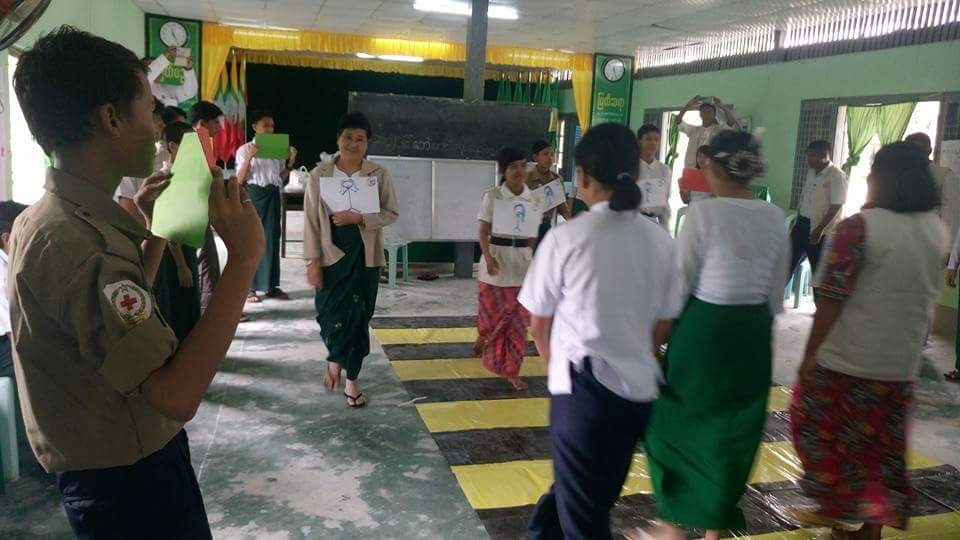
In order to add value to the School Based Disaster Risk Reduction project in Myanmar funded by Hong Kong Red Cross, Myanmar Red Cross conducted Youth in School Safety Facilitators training for a purpose of integration between Disaster Management and Organizational Development/Youth as the youth empowerment initiative.
Objectives of the Workshop
To enhance the capacity of Myanmar Red Cross School Safety with meaningful involvement of youth volunteers to be facilitators in order to roll out school safety initiative into all schools over the country through the Regional Youth in School Safety tool.
To provide an opportunity to youth and volunteers to expand Red Cross Youth clubs and junior Red Cross youth members to join the Red Cross programmes with a children-friendly training module.
The Youth in School Safety Facilitators training in Myanmar was held on 5-8 December 2016. It was facilitated by Youth and Volunteering Officer, DRR Officer and two Myanmar RC youth facilitators as co-facilitators in close cooperation with the OD and DM department of MRCS.
Key Outcomes of the Training
Participants had clear understanding of the school safety framework with 3 pillars, and the concept of school safety action.
Participants became the first-time facilitators in school safety through the demonstration at school and built confidence to continue to be youth facilitators
Participants developed their action plans to extend this programme to their communities/towns with their own resources and with the practice of the guide.
Finally, the OD and DM department recognized the youth facilitators as key players for their School Safety programme and appreciated the training module and would like to integrate this module into School Safety programme from 2017 onwards.
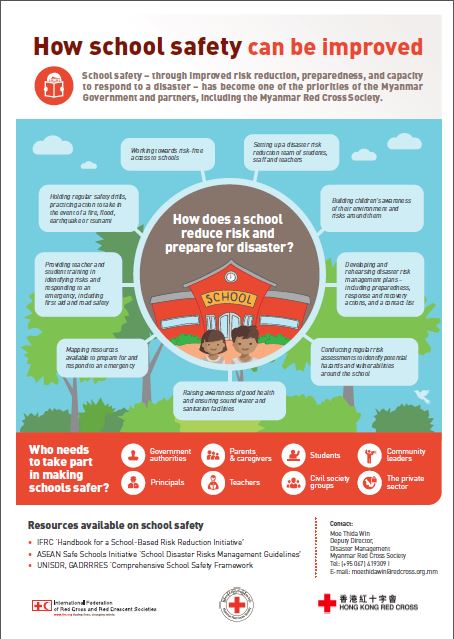
Purpose The document aims to promote school safety program in Myanmar and to share the lesson learnt from Myanmar Red Cross
Overview For future resilience of families and communities, we need to make schools safer, children and adults wiser and communities readier to respond to disaster.
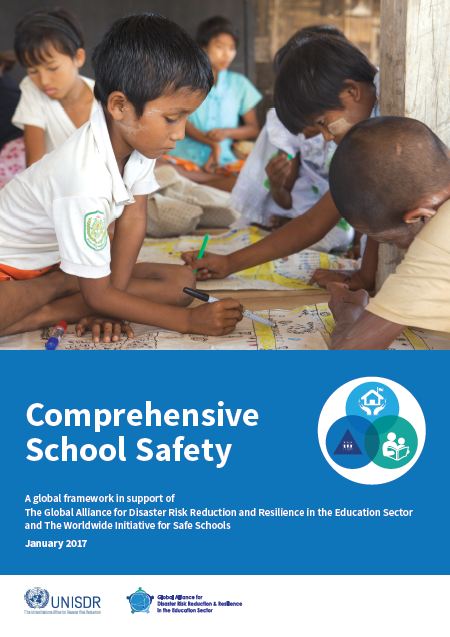
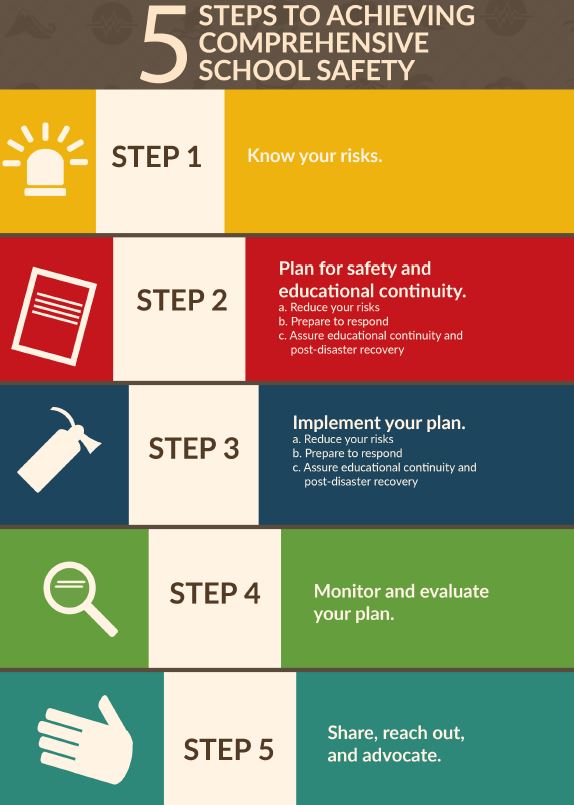
Purpose This document aims to provide a global framework for school safety to reduce the risks of all hazards to the education sector.
Overview This document is a revised version aligned with Sendai Framework for Disaster Risk Reduction and the Sustainable Development Goals launched in 2015. It is mutually agreed b y the key stakeholders engagaed in school safety as part of the Global Alliance for Disaster Risk Reduction and Resilience in the Edfucation Sector (GADRRRES). IFRC is part of this alliance.
Usage: Policy development and guidance for implementation
Audience: School safety decision makers and technical staff
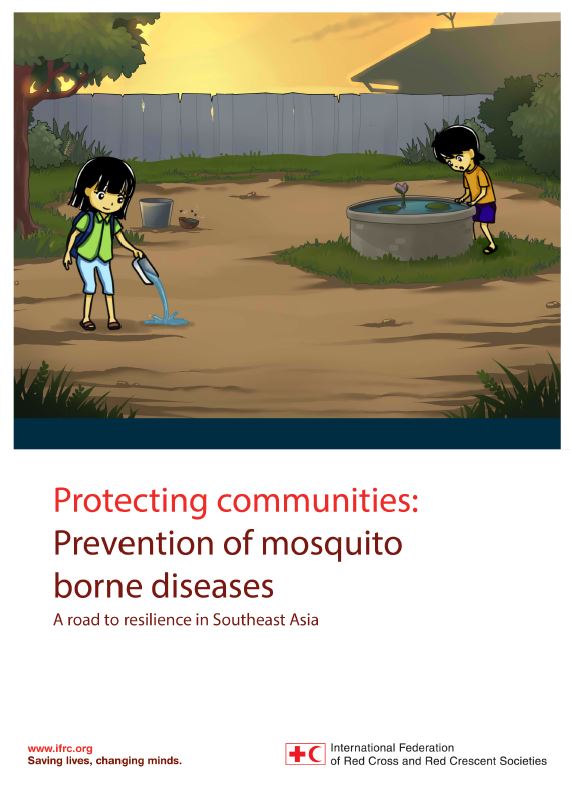
This comic book is a children-friendly tool to support school safety, to raise awareness and prevention of mosquito-borne diseases such as dengue, zika and chikungunya, with the key messages: clean up, cover up and keep it up.
The ASSI workshop serves as a medium for learning and sharing experiences among key actors working in disaster risk reduction (DRR) and education in order to inform the development of a framework for the ASEAN Safe Schools Initiative, and launches the initiative’s phase 2.
This workshop aims to strengthen cooperation and coordination between the disaster risk management community and the education community under the ASEAN Safe Schools Initiative and provide space for professionals, policy and decision makers, and development agencies to better understand each other’s perspectives and help develop a common framework for action to improve school safety in the ASEAN region.
Specific objectives of the workshop are to:
Launch the ASEAN Safe Schools Initiative Phase 2 and build a common understanding of its objectives, expected outputs and outcomes;
Discuss and provide guidance for the first deliverables of the ASEAN Safe Schools Initiative, including a common framework on safe schools for ASEAN and indicators to monitor school safety implementation;
Identify and strengthen cross-sectoral and multi-stakeholder mechanisms for collaboration among Ministries of Education and National Disaster Management Offices (NDMOs) of ASEAN Member States, Civil Society Organisations (CSOs) and other partners and stakeholders at country and regional levels; and
Provide a forum for sharing information on other relevant safe school related initiatives within the region and discuss collaboration for ASSI implementation at national and regional levels and joint efforts for collaboration, cooperation, and resource mobilization.
Below are the presentations delivered during the workshop:
Presentation keywords: Global Alliance for Disaster Risk Reduction & Resilience in the Education Sector (GADRESS), Asia Pacific Coalition for School Safety (ACSS), 6th AMCDRR Voluntary Statements of Commitments, Beijing Youth Commitments 2014, “Young Humanitarians in Action”, SBDRR (school-based disaster risk reduction), IEC materials, Youth Red Cross, PAPE (Public Awareness Public Education) for DRR, Application for PAPE.
Recommendations:
Support to formal recognition/adoption of the Comprehensive Framework for School Safety as a common framework in Asia Pacific.
Implementation of other global and regional commitments to build resilience in Education sector (HFA1&2, GADRRES/ACSS, AMCDRR, Beijing Conference).
Use already developed tools (i.e. PAPE) but engage key stakeholders in validation process.
Build more formal partnerships with governments and other key stakeholders.
Contribute to harmonization of tools, models, frameworks as key for long term systematic approach to building resilience in education.
RCRC invites to consider developing ONE common, comprehensive model for engagement at national/school level (process best to be led by host governments with technical support of all other stakeholders).
2. ASEAN Safe School Initiative (ASSI) Program, presented by Plan International (This is an overview about ASSI program governance and structure, delivered by Plan International as ASSI lead agency)
Presentation keywords: NGO, multi-donor funding, Plan International, World Vision, Mercy Malaysia, Save the Children
5.ASEAN Cooperation on Disaster Management (a presentation on AADMER presented by ASEAN) Presentation keywords: AADMER work programme, Priorities, Flagship Projects, Phase 2 strategies, partners.
6. Creating A Culture of Safety and Resilience in Schools: the SEAMEO Initiatives (SEAMO-The Southeast Asian Ministers of Education Organization is a regional intergovernmental organization established in 1965 among governments of Southeast Asian countries to promote regional cooperation in education, science and culture in the region. Member countries comprise of all ASEAN members andTimor Leste).
Presentation keywords: Overview, DRR Framework, integrating climate change, integrating education for sustainable development, toolkit for building disaster-resilient school communities, competency framework for Southeast Asian school heads, LEADeXCELS (excellence in leading education in emergency situations), integrating DRR and DM in mathematics education.
Lessons learned:
Collaborative nature inherent in a regional and multi-country approach demands that the commitment and support, including the clear delineation of roles, are present at all stages of project implementation.
Mapping and sharing of resources and expertise, which are essential given the tight budgets, resource shortages, and increased accountabilities, can help facilitate the DRR and safe school initiatives within the region.
Strong policies and legal frameworks are critical in coordinating, harmonizing, and spurring the various efforts that would strategically and efficiently prepare and assist schools.
The School Disaster Risk Management (SDRM) Guidelines aim to support school-based risk assessment and planning, educational continuity planning, and development of response skills (such as standard operating procedures, incident command systems in case of hazards) and response provisions (such as temporary and locally built learning facilities) –all of which form the School Disaster Risk Management Plan.
The SDRM Guidelines aim to reduce the impact of disasters on the school’s environment, physical construction, as well as to avoid possible impacts on the students’ learning outcomes. To achieve this, the Guidelines attempt to harmonize existing school safety template documents with existing global and regional approaches to come up with a common set of standards that can be adopted and adapted in Southeast Asian countries.
Overview:
The first section presents the common principles and standards in school disaster risk management discussed in a step-by-step manner, including a discussion on the roles and responsibilities of the SDRM Committee and SDRM Focal Point, the purpose is to develop a SDRM Plan that will guide the school in achieving comprehensive school safety.
The second and third section discusses about the relevant tools and activities to develop the SDRM Plan.
The fourth section contains country profiles that briefly describe the strengths and challenges of each Southeast Asian country. A number of case stories are also provided to illustrate simple, practical, and easy-to-replicate good practices of school-based disaster risk management.
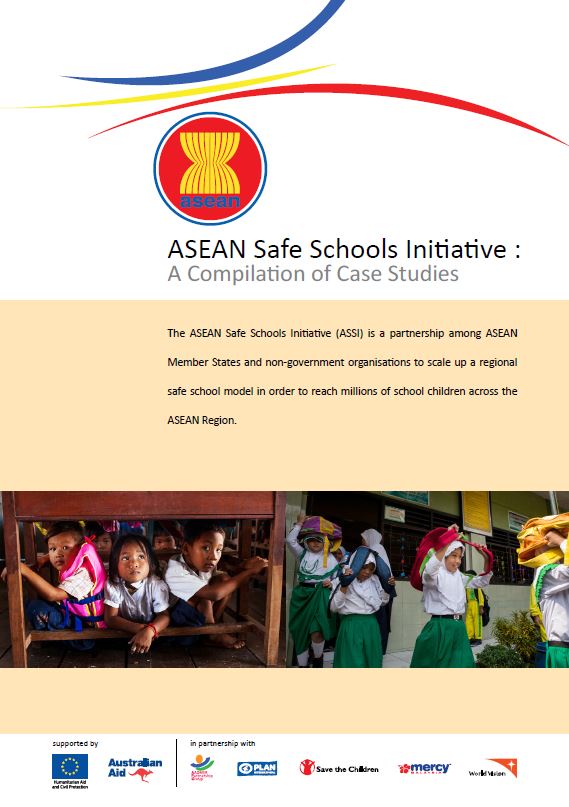
The compilation of case studies showcases the good practices in 6 ASEAN countries in school safety, conducted within ASEAN Safe Schools Initiative (ASSI) programme.
Overview:
This compilation covers 6 country case studies:
Three case studies on Cambodia, Indonesia and Lao PDR showcase ASSI’s good practices and key learnings.
Three case studies on Myanmar, Philippines and Thailand showcase good practices, key learnings and enabling environment from various school safety initiatives in the countries including ASSI in Myanmar and Thailand.
The rollout manual primarily aims to assist country focal agencies on school safety (e.g. Ministry of Education and National Disaster Management Office) in translating the conceptual framework into implementable actions through detailed steps to generate the outputs, key actors, and timelines, as well as elaboration on working mechanisms at national and regional level for school safety.
The manual shall be used as a reference for education authorities, government agencies, local authorities with mandates relevant to education and DRR, and who are tasked with planning, implementing, and monitoring school safety-related activities.
The manual also aims to bring all concerned agencies and stakeholders to a uniform understanding of the framework operationalisation, which highlights inter-linked processes within the 15-year timeframe, coinciding with the completion of the Sendai Framework for Disaster Risk Reduction (SFDRR).
With this overall sketch for operationalisation, concerned agencies, potential partners and stakeholders at national, regional and global level shall be in a better position to determine their roles in supporting, facilitating, or coordinating with various activities during operationalisation.
Overview:
The operationalisation of the ASEAN Common Framework for Comprehensive School Safety entails 4 key activities done in a cyclical process:
Activity 1 – Assessing current status, gaps and needs
Activity 2 – Setting country priorities and targets
Activity 3 – Developing Country Action Plan on school safety
Activity 4 – Developing and undertaking progress monitoring and impact evaluation (the results of which will be fed into Activity 1 of the next operationalisation phase/period)
The ASEAN Common Framework for Comprehensive School Safety is extracted from the global Comprehensive School Safety (CSS) Framework, and it contains details to guide education ministries and National Disaster Management Offices (NDMOs) towards more intensified action on school safety.
Contextualised for ASEAN members to operationalise the global framework, this framework addresses the need for the development of a mechanism to effectively operationalise the CSS framework at the regional, national, and sub-national levels.
Overview:
The framework aims to achieve the same targets as with the Comprehensive School Safety Framework. To ensure certain uniformity of progress monitoring indicators for school safety, a set of monitoring indicators has been developed, which could serve as minimum standard for countries implementing the Framework, comprising:
6 output indicators to track the impact on school safety at the national using quantifiable data collected at school level
14 input indicators to track school safety interventions and impacts at school level.
In addition to discussing about the school safety in the ASEAN region, the document also discusses about framework, its key elements and the mechanisms of cooperation on the framework at national and regional levels.
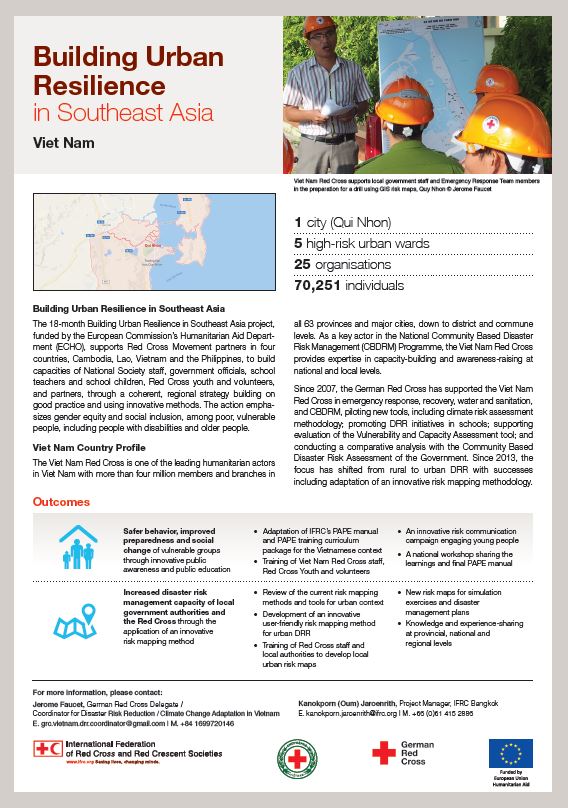
This one-pager offers the an overview of the Building Urban Resilience in Southeast Asia in Viet Nam. The project is a joint initiative of the IFRC and ECHO.
The project and the one-pager is a part of a regional project, which is to be read together with the project overviews by country on implementation: