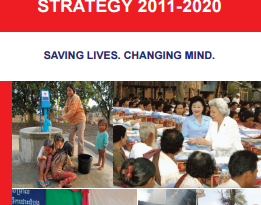
Purpose: The Strategy 2011-2020 – a compass to guide the Cambodian Red Cross (CRC) in designing of sector strategic plan, short, mid and long term development plan, for implementation with clear indicators and expected results, so that the national society…
The Strategy for Development of Viet Nam Red Cross Society to 2020 “Changing minds – Raising profile – Protecting lives” identifies the Viet Nam Red Cross’s priorities for developing a strong organisation and providing rapid and effective responses to humanitarian situations in support of poor and vulnerable people throughout the nation.
This policy (in Khmer and English) establishes the basis for the Cambodian Red Cross to ensure that the gender and diversity differences are taken into account and systematically addressed in relation to core areas as defined in CRC Strategy 2011 – 2020, such as disaster management, health and health care in the community, promotion of the movement’s fundamental principles and humanitarian values, and organizational development and resource development.
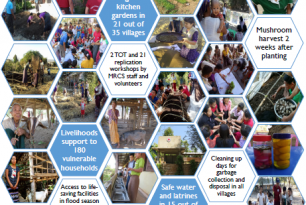
This infographic, entitled Resilient Communities in Myanmar, features the results of the activities that were conducted in the communities in Myanmar, including livelihoods support, disaster mitigation and trainings.
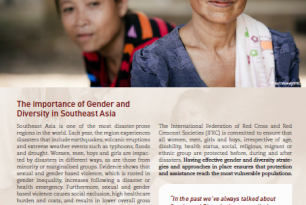
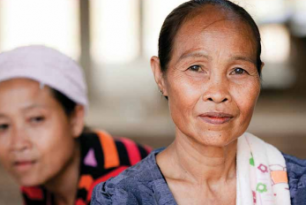
This four-page case study launched on the occasion of the International Women’s Day on 8 March 2017 showcases the importance of Gender and Diversity mainstreaming within Disaster Risk Reduction policies, strategies and programmes, with a focus on South East Asian countries.
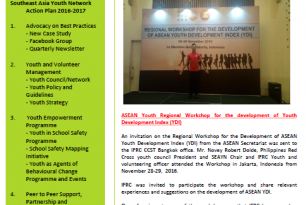
Overview This newsletter features the updates in December 2016 to February 2017 of the activities of South East Asia Youth Network (SEAYN). Past Issues For SEAYN newsletter – Issue 1, click Issue 1 For SEAYN newsletter – Issue 2, click Issue 2 For SEAYN…
The purpose of this tool is to provide a standard method of conducting an organisational assessment on gender and diversity, focusing on five key thematic areas: political will and leadership, organizational culture, resources and capacities, programme delivery and implementation, and accountability. The assessment can be completed as a standalone process, or as complementary to the Organisational Capacity Assessment and Certification (OCAC) or Branch Organisational Capacity Assessment (BOCA). The findings of the assessment can form the basis of recommendations on how to strengthen gender and diversity in all areas of the organisation.